

Mexican Navy plane carrying a young medical patient and seven other people crashed into coastal waters near Galveston, Texas, in heavy fog, killing at least six people, Mexican officials said Tuesday.
The tragedy unfolded during what was meant to be a humanitarian medical transport mission, turning a routine flight into a devastating international incident.
The twin-engine Beech King Air 350i was operating in coordination with a nonprofit organization that helps transport Mexican children with severe burns to specialized hospitals in the United States.
🚨BREAKING: A Mexican Navy plane carrying burn patients to a Texas hospital crashed into Galveston Bay while approaching the airport, killing at least five people.
— The Patriot Oasis™ (@ThePatriotOasis) December 23, 2025
Local fishermen rushed to the wreckage to search for survivors. pic.twitter.com/fgP570hOS3
On Monday afternoon, the aircraft was approaching Scholes International Airport in Galveston, near Houston, when communication with air traffic controllers suddenly went silent.
Mexican authorities initially believed the plane had landed, but soon realized something had gone wrong when contact could not be re-established, Mexican President Claudia Sheinbaum said during her Tuesday morning briefing.
Search and rescue teams were dispatched as concern mounted. Crews eventually located the wreckage in a bay near the base of the causeway that connects Galveston Island to the Texas mainland.
Five bodies were recovered relatively quickly, and two people were pulled alive from the wreckage. However, one crew member, 29-year-old Mexican Navy Lieutenant Luis Enrique Castillo, remained missing, triggering a daylong search in the murky waters off the coast.
Back in Mexico, Castillo’s family waited anxiously for news in their small rural community of El Pantano, located in the southern state of Veracruz. With no visas to travel to the United States, they were forced to rely entirely on sporadic phone calls and news updates.
“We don’t know what to do,” his father, Eduardo Castillo, said earlier Tuesday. “All we can do is wait.”
That wait ended late Tuesday night when search teams recovered Castillo’s body, confirming the worst fears of his loved ones. President Sheinbaum called the incident “very tragic,” noting that members of Mexico’s armed forces were among those who lost their lives.
As investigators begin piecing together what happened, aviation experts say the early details raise serious questions about the plane’s descent and the conditions surrounding the attempted landing.
Radar data indicates the aircraft was flying dangerously low as it approached the runway, according to Jeff Guzzetti, a former investigator with both the National Transportation Safety Board and the Federal Aviation Administration.
At the time of the crash, Galveston was shrouded in thick fog, with visibility estimated at just half a mile. Compounding the danger, a key navigation system for the runway the aircraft was assigned to had been out of service for about a week.
That system normally provides critical guidance to pilots during low-visibility approaches, helping them stay aligned and at a safe altitude.
Under standard aviation procedures, Guzzetti explained, a pilot must abort a landing attempt if the runway is not visible at a decision altitude of around 205 feet. Instead of continuing downward, the aircraft should climb and either attempt another approach or divert to a different airport.
Radar data suggests the Mexican Navy plane continued descending rapidly below 200 feet while still about two miles from the runway. “Just looking at the recorded flight track and comparing it with the weather and the airport equipment outage, it seems to me that this landing approach should never have occurred,” Guzzetti said.
While a mechanical failure cannot be ruled out, he emphasized that the available information points to a highly risky approach in extremely poor conditions.
The crash drew immediate attention from people living near the water. Sky Decker, a professional yacht captain who lives close to the site, said he rushed out in his boat to see if he could help. Navigating through dense fog, he reached the wreckage with the help of police officers.
Inside the partially submerged aircraft, Decker found a badly injured woman trapped beneath seats and debris. Only a few inches of air remained between her face and the water, which was contaminated with jet fuel. “She was really fighting for her life,” he said. Decker also pulled out a man seated in front of her who had already died.
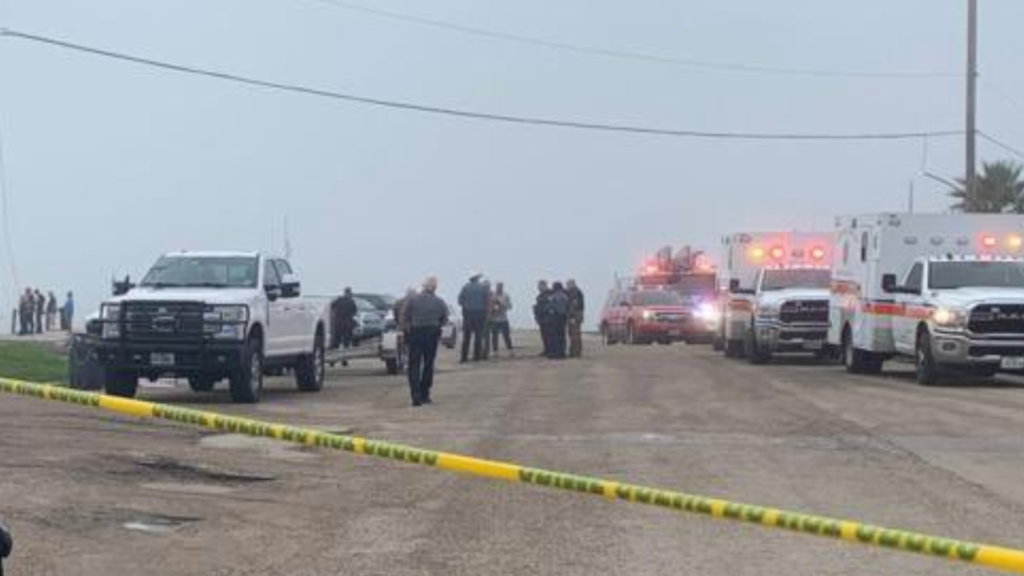
Emergency crews transported survivors by ambulance, while divers and investigators secured the scene. The National Transportation Safety Board said it could take a week or more to recover the aircraft from the water, after which a detailed examination can begin.
Investigators will review maintenance records, weather forecasts, pilot decision-making, and communications between the aircraft and air traffic control. A preliminary report is expected within 30 days.
Experts also say investigators may examine whether the urgency of the medical mission influenced the pilot’s decisions. There have been previous accidents involving air medical flights in which pilots pressed on despite dangerous conditions in an effort to save patients.
“This is something we’ve unfortunately seen before,” Guzzetti said. “Pilots sometimes feel intense pressure when a life is at stake.”
Aviation safety analyst John Cox noted that the Beech King Air 350i is a well-established aircraft with a strong safety record. The design dates back decades but has been continually updated and is typically equipped with modern avionics and navigation systems. “It’s a very proven airplane,” Cox said, emphasizing that technology alone does not eliminate risk in extreme weather.
Mexico’s Navy confirmed that the flight was part of a humanitarian mission conducted with the Michou and Mau Foundation, a charity that has spent more than two decades arranging specialized burn treatment for children.
The organization was founded after a tragic fire claimed the life of a mother and one of her children, while another survived after being treated in Galveston. Since then, the foundation has helped more than 2,000 patients receive care in the United States and elsewhere.
In a statement posted on social media, the foundation expressed deep condolences to the families of those killed in the crash. Shriners Children’s Texas hospital in Galveston also acknowledged the tragedy, saying it learned of the crash with profound sadness, though it declined to comment on the condition of the child involved.